- Understanding Loneliness and Mental Health in Older Adults
- The Growing Loneliness Challenges in the UK
- How Isolation Affects Elderly Mental Well-being
- Why Social Connection Becomes More Important With Age
- Why Senior Social Activities Matter
- Reduce Loneliness and Strengthen Emotional Resilience
- Build Confidence and Belonging
- Support to Focus on Health
- Gentle Physical Activity Benefits Linked to Social Engagement
- Popular Activities in Care Homes That Lift Senior Well-Being
- Care Home Activities and Their Benefits for Seniors
- Care Home Social Programs That Make a Difference
- Structured Weekly Activity Calendars
- Personalised Support Based on Resident Interests
- Intergenerational Connections and Community Links
- How Staff Encourage Participation and Confidence
- The Benefits of Activities for Seniors
- How Care Homes Can Reduce Loneliness Through Everyday Interaction
- Life at Lotus Care. Where Community, Comfort & Connection Come First
- Support That Matters for Every Older Adult


How Social Activities Improve Mental & Emotional Well-Being for Seniors
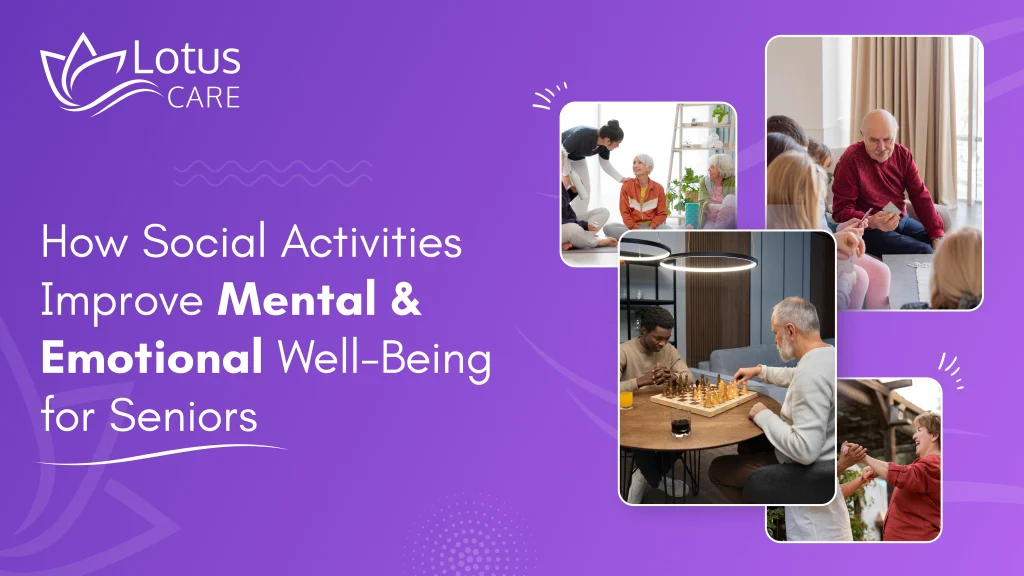
Growing older does not remove the need for friends, laughter, and a sense of belonging. For many older adults in the UK, staying socially connected becomes harder with time, especially for those living alone or settling into a care home. This is where regular senior social activities can make a genuine difference.
When there are daily opportunities available to take part in group activities, chat with others, or enjoy familiar hobbies, then seniors are more likely to feel positive and involved. Well-planned activities in care homes do more than just keep the people busy. They play an important role in supporting elderly mental well-being, easing loneliness, and helping each day feel meaningful.
In this guide, we will explore how social connections protect mental and emotional health in later life, how care homes social programs work, and the everyday benefits of activities for seniors that help residents stay engaged, connected, and feel valued.
Understanding Loneliness and Mental Health in Older Adults
Loneliness in the elderly is closely linked to poor mental and physical health of the individual with increasing the risk of conditions like depression, anxiety, and cognitive decline.
Factors that contribute to loneliness are discussed here.
The Growing Loneliness Challenges in the UK
Loneliness among older adults has become a growing concern across the UK. Many seniors find that their social circle is becoming smaller due to life changes, health conditions, or reduced mobility. This change has created a long period of quietness that affects both confidence and mood.
Common reasons seniors feel lonely:
- Living alone after a partner has passed away.
- Reduced ability to go out or travel independently.
- Friends and families living far away.
- Health issues that limit daily interaction.
- Loss of routine or meaningful roles.
These experiences show why senior social activities are not optional, as they are an important part of having emotional support.
How Isolation Affects Elderly Mental Well-being
Isolation can slowly impact the mind and mood of an individual. When older adults spend most of their day without communication or stimulation, it may lead to emotional decline.
Possible effects of long-term isolation:
- Low mood or increased worry.
- Less interest in hobbies or daily tasks.
- Changes in sleep and appetite.
- Feeling disconnected from family or community.
- Slower cognitive responses due to a lack of interest.
Regular activities in care homes give seniors the chance to talk, laugh, learn, and stay mentally active. Even a short group session can brighten the day and improve the overall emotional stability.
Why Social Connection Becomes More Important With Age
As individuals grow older, it becomes increasingly important to maintain a positive and balanced daily life with the help of proper connections.
Social contact helps by:
- Giving structure and purpose each day.
- Encourage movement, independence, and interaction.
- Supporting memory through sharing stories and conversation.
- Building friendships that reduce loneliness.
- Improve confidence and give emotional strength.
This is why many care home social programs are built around the gentle, enjoyable activities that help residents stay engaged and feel valued.
Why Senior Social Activities Matter
As people age, emotional needs change, routines shift, and independence may be reduced. With regular social interaction the person can feel comfortable, motivated, and mentally stable. A well-designed senior social activities help older adults to stay connected, confident, and emotionally balanced by making them an important part of their daily care.
Let’s know why senior social activities are important for elderly mental well-being.
Reduce Loneliness and Strengthen Emotional Resilience
With the help of regular interaction, elderly people feel seen, heard, and valued. Even small moments of connection can lift someone’s mood and strengthen their emotional balance.
Social activities can help by:
- Replace the long periods of silence with friendly conversation.
- Offer instant comfort by sharing the moments.
- Encourage positive thinking and reduce the feeling of isolation.
- Help them feel a part of a group rather than being alone.
These benefits make the senior social activities an important part of everyday care.
Build Confidence and Belonging
A steady routine gives older adults a sense of better social engagement, even if in small doses. This will help them feel more confident and in control of their day.
It supports:
- A sense of belonging.
- Familiarity with other residents.
- Opportunity to stay active.
- Help them feel a part of a group rather than being alone.
A simple chat over tea or a planned afternoon group can make a big difference.
Support to Focus on Health
Talking, participating, and learning keep the mind active. Cognitive decline can often speed up when seniors have little mental stimulation.
Engaging activities can:
- Improve memory recall.
- Maintain problem-solving skills.
- Strengthen attention and focus.
- Slow down cognitive decline.
This is why many care teams include quizzes, music, puzzles, and storytelling as part of their activities in care homes.
Gentle Physical Activity Benefits Linked to Social Engagement
The movement in the body is easier when it is enjoyable. Many social sessions naturally include light physical activity that supports overall health.
Examples include:
- Chair-based exercises.
- Gentle stretching groups.
- Walking clubs.
- Dancing or music-based movement.
These low-impact activities help to improve the flexibility and allow to maintain the balance of the body with better energy levels.
Popular Activities in Care Homes That Lift Senior Well-Being
Daily life in a care home is better when the resident has the choice to make the activities more meaningful and enjoyable. The activity session gives older adults a chance to stay active while connecting with others and maintaining positivity. Well-planned activities in care homes also encourage confidence, creativity, and emotional balance.
Below is a clear look at the type of activities most commonly offered and how each one supports mental and emotional well-being.
Care Home Activities and Their Benefits for Seniors
| Activity Types | What It Includes | How It Supports |
| Group games and social sessions | Board games, small puzzles, or group chats. | Build confidence, reduce loneliness, and keep mind active. |
| Music and creative arts | Singing, painting, or crafts. | Reduce stress, spark creativity, and support emotional expressions. |
| Gentle movement and exercise | Chair exercise, stretching, and dance-based movements. | Improve the level of energy, support physical health, and maintain productivity. |
| Learning and cognitive activities | Quizzes, small games, and educational talk. | Strengthen memory, maintain focus, and support better health. |
| Gardening and outdoor time | Growing plants, walking in the garden, and doing light outdoor tasks. | Promote calmness and encourage gentle daily activity. |
| Community and themed events | Birthday celebrations, seasonal events, and cultural days. | Build a sense of belonging, create better memories, and maintain emotional balance. |
| Well-being and relaxation sessions | Meditation, sensory activities, and quiet rooms. | Help to reduce anxiety and support overall mental calmness. |
These activities allow one to maintain better well-being and allow the elderly person to stay positive for the whole day.
Care Home Social Programs That Make a Difference
Strong care home social programs help residents feel included, active, and supported each day. These care home social programs make the activities in care more meaningful and give seniors a sense of comfort and a flexible routine that supports elderly mental well-being.
Structured Weekly Activity Calendars
- Provide a mix of senior social activities throughout the week.
- Help the resident stay engaged, positive, and active.
- Create a steady routine that supports emotional balance.
Personalised Support Based on Resident Interests
- Activities are designed to keep each person’s hobbies and comfort level.
- Makes activities in care homes more enjoyable and accessible.
- Encourages active participation from those who may feel shy or unsure.
Intergenerational Connections and Community Links
- Visits from schools, volunteers, and families.
- Create a warm moment that supports elderly mental well-being.
- Helps residents feel connected to their wider community.
How Staff Encourage Participation and Confidence
- Gentle guidance and friendly support.
- Help residents feel comfortable joining senior social activities.
- Encourage involvement without pressure.
These are some of the programs initiated by the care home to maintain engagement among the others.
The Benefits of Activities for Seniors
Regular activities in care homes play an important role in supporting the elderly mental well-being. Whether it is group activity, creative hobbies, or gentle movement, well-planned senior social activities make each day feel more positive and purposeful. The overall impact is long-lasting and felt across both emotional and physical health.
Key benefits of activities for seniors include:
- Better emotional balance and reduces the feeling of loneliness.
- Stronger confidence is maintained through regular senior social activities.
- Improve the focus, memory, and overall cognitive health.
- A season of purpose when taking part in meaningful routines.
- Increase mobility and energy level from gentle physical sessions.
- Daily opportunity to connect, talk, and build friendships.
- A supportive atmosphere that lifts elderly mental well-being is maintained.
- Clear structure that helps residents feel settled and secure.
This is why the consistent and varied activities in care homes play such an important role in everyday life. They can improve the experience of aging, support dignity, and help residents stay active in ways that feel comfortable and enjoyable.
How Care Homes Can Reduce Loneliness Through Everyday Interaction
A simple daily interaction can make your life feel brighter for older adults. Every small moment of kindness helps and supports the elderly mental well-being. Care teams create friendly spaces where residents feel safe, included, and comfortable. These warm everyday actions work alongside regular activities in a care home to reduce loneliness.
Ways the care home reduces loneliness:
- Staff greet the resident with a smile and a friendly chat.
- Seniors are encouraged to sit together with the resident in shared lounges.
- Quiet residents are gently supported to join group conversations.
- The care team helps them take part in senior social activities.
- No one is left alone during the mealtime or breaks.
- Staff check in during the day to see how residents are feeling.
- Calm and cosy spaces make it easier for residents to talk and relax.
These simple habits help residents feel less alone and more connected every day.
Life at Lotus Care. Where Community, Comfort & Connection Come First
At Lotus Care, we create a warm and friendly environment where every resident feels valued. Our approach is to maintain the focus on meaningful senior social activities, gentle routines, and daily support that help in improving elderly mental well-being. We make sure that residents can stay active, connected, and comfortable through the well-planned activities in care homes that suit different interests and abilities.
What makes life at Lotus Care special:
- A caring team that supports each resident with kindness.
- Daily senior social activities that encourage confidence and connection.
- Quiet spaces where residents can relax and feel at ease.
- Group sessions that bring job, comfort, and a sense of belonging.
- A regular community event that helps residents stay engaged.
- Personalised care plan that supports emotional and social needs.
- A homely atmosphere where everyone feels part of the family.
Our goal is simple: to make every day meaningful, enjoyable, and full of moments that support strong mental and emotional well-being.
Support That Matters for Every Older Adult
Social connection is important as it helps adults to stay happy, confident, and emotionally strong. Regular senior social activities and well-planned activities in care homes give residents a purpose to live and make each day enjoyable. These moments of interaction support elderly mental well-being, ease loneliness, and help seniors feel more settled and secure.
At Lotus Care, we believe every resident deserves a life filled with comfort, community, and meaningful moments. With the right support, warm surroundings, and caring people, every day becomes enjoyable. This allows the elderly person to stay engaged, valued, and connected.
Social activities are not a part of the day; they are a powerful way to improve the overall well-being of every older adult we care for.
Helping residents maintain their independence is as important to us as it is to them. We can support them with day-to-day tasks such as dressing, bathing, going to the toilet,...
Helping residents maintain their independence is as important to us as it is to them. We can support them with day-to-day tasks such as dressing, bathing, going to the toilet,...
Helping residents maintain their independence is as important to us as it is to them. We can support them with day-to-day tasks such as dressing, bathing, going to the toilet,...
Know more about care homes.
Connect with us for person-centered care, comfort, and a warm place that truly feels like home.