- Why Early Recognition Matters for Ageing Loved Ones
- Key Elderly Care Signs Families Should Look For
- Memory Changes and Daily Confusion
- Declining Personal Hygiene and Self-Care
- Elderly Mobility Issues and Increased Risk of Falls
- Poor Eating Habits and Reduced Appetite
- Emotional or Behavioural Shifts
- Difficulty in Managing Home
- When These Signs Suggest It’s Time for Extra Support
- When Home is Not Enough
- When to Consider Care Home Options
- Types of Professional Support Available
- Home Care Support Services
- Respite Care for Families
- Residential and Care Home Support
- How To Talk to Your Loved One About the Idea of Care
- Choose the Right Moment
- Keep Your Conversation Simple and Respectful
- Involving Them in the Decision
- How Lotus Care Supports Families
- A Safe and Comfortable Environment
- Personalised Care Plans for Every Resident
- A Supportive Community That Offers Independence
- Guidance to Families at Every Step
- Supporting Your Loved One Safely


Early Signs an Elderly Person May Need Professional Care Support
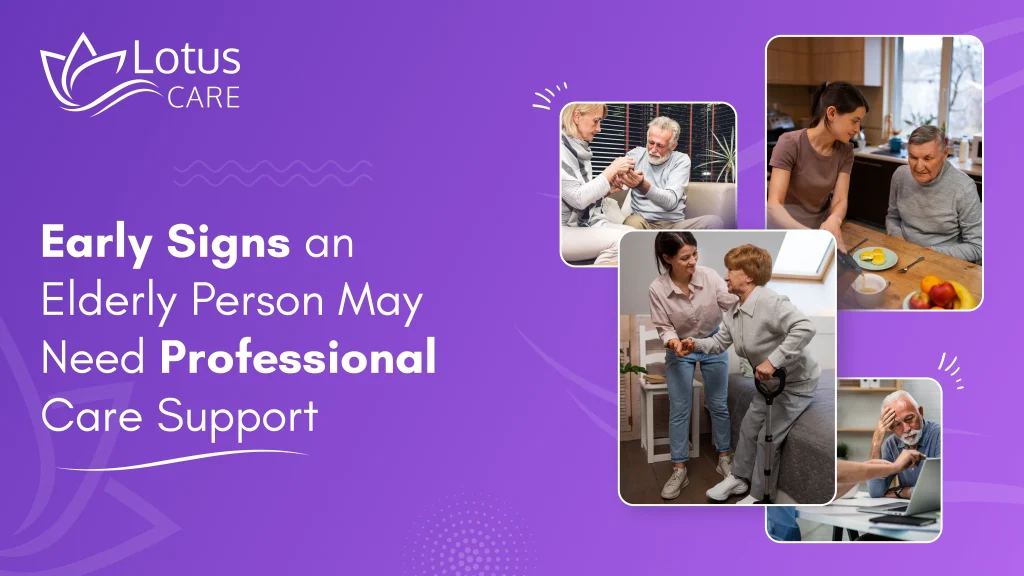
Noticing a small change in someone you care about can be worrying, especially after a particular age. Many families begin to explore aged care support when they notice changes that affect day-to-day living. These elderly can seem small at first, but regularly, this is tough. Missed meals, difficulty in moving safely, or forgetting important tasks are some of the early indicators that someone may need extra care.
This guide outlines the key signs to look for and helps you understand when practical support can make daily life safer, easier, and more comfortable for your loved ones.
Why Early Recognition Matters for Ageing Loved Ones
Knowing about changes early will help you act before small difficulties turn into daily risks. Many senior health warning signs start slowly. Missed medication, hesitation in walking, or confusion during routine tasks all these often appear long before a serious incident happens.
Understanding these signs allows you to plan the right level of care and support at the right time. It also reduces the pressure on family members who may already be helping with routine and care. Early recognition makes it easier to maintain safety, well-being, and ensure that your loved one stays independent.
Key Elderly Care Signs Families Should Look For
Changes in health or behavior often appear gradually. Understanding these signs early can help you decide when extra support might be needed.
Below are the most common areas where older adults start to show difficulty:
Memory Changes and Daily Confusion
Small changes often appear before bigger risks. These can be early senior health warning signs. Look out for:
- Forget taking medicines or important appointments.
- Repeat the same question throughout the day.
- Confusion during simple tasks like making tea or using appliances.
- Losing track of time or getting mixed up with routines.
Declining Personal Hygiene and Self-Care
A decline in personal care often shows that everyday tasks are becoming difficult. Signs of needing aged care support include:
- Wearing unwashed or mismatched clothes.
- Struggling to bathe, dress, or manage basic grooming.
- Neglecting hair, teeth, or shaving.
- Reduced motivation to stay clean and presentable.
Elderly Mobility Issues and Increased Risk of Falls
A small change in movement can affect safety around the home. Common elderly mobility issues include:
- Walking slowly or holding onto furniture for balance.
- Hesitating when climbing stairs or standing up.
- Bruises from small slips or trips.
- Avoid going to certain areas of the home due to fear of falling.
Poor Eating Habits and Reduced Appetite
Changes in appetite may seem small, but they often impact health. Watch for these elderly care signs:
- Skipping meals or eating very little on a regular day.
- Relying more on biscuits, snacks, or ready meals instead of cooked foods.
- Losing weight without trying.
- Forgetting to eat or drink enough water.
Emotional or Behavioural Shifts
The change in mood or behaviour can point to underlying issues. These may be linked to senior health warning signs. Look out for:
- Taking less participation in family and social activities.
- Sudden irritation or various mood swings.
- Loss of interest in hobbies.
- Confusion or frustration during everyday tasks.
Difficulty in Managing Home
Struggling to keep the house clean or organized often shows that daily life is becoming tough. This may mean aged care support is needed. Signs include:
- Cluttered rooms or unsafe walking spaces.
- Unopened postal mail or unpaid bills.
- Empty fridge or expired food.
- Difficult in shopping, washing, or housework.
These are the early signs that you need to take care of when it comes to knowing that your elderly person needs care and support.
When These Signs Suggest It’s Time for Extra Support
Some changes can be managed by just making a small adjustment at home. Others may show that daily life is becoming unsafe or too difficult to manage alone. Understanding when to consider care home support helps you in making the decision before a serious problem occurs.
If these few signs appear together, like mobility problems, confusion, poor hygiene, or missed meals, then it may mean that your loved ones need more structured and reliable help. Early planning also reduces pressure on family members who may already be managing shopping, cleaning, or personal care on their own.
When Home is Not Enough
- Frequent falls or close calls around the home.
- Struggle in managing daily routine or moving safely.
- Memory issues leading to missed medication or risky situations.
- Family members feel overwhelmed or unable to provide consistent care.
When to Consider Care Home Options
There are many possible moments when you can think that professional or all care is the safest option for your loved ones. You may need to think about when to consider care home support if your loved one is:
- Needs supervision throughout the day due to confusion or forgetfulness.
- Showing ongoing mobility issues that increase the chances of falls.
- Losing weight, missing meals, or not managing a daily routine.
- Feeling isolated or withdrawn despite effort given at home.
- Living with health conditions that require regular monitoring.
A care home can provide a stable, comfortable environment where daily needs are met safely and families can gain comfort and calmness.
Types of Professional Support Available
As you or your loved one grows older, you may notice that your elderly parent starts to slow down the work. When managing the daily routine becomes difficult, then it is a sign that the right care can make life safer and more comfortable.
There are several options to choose from, depending on how much help your loved one needs. Understanding each type makes it easier to decide what will suit them best. This is also where aged care support can provide real peace of mind for both families and older adults.
Home Care Support Services
Home care is ideal when someone wants to remain in their own home but needs help with everyday tasks. This support can include:
- Assistance is needed for handling the regular work and personal care.
- Need help with cooking, cleaning, and shopping.
- Medication reminders and daily check-ins.
- Companionship to reduce loneliness.
It is flexible, so families can choose as little or as much support as needed.
Respite Care for Families
Caring for a loved one can be rewarding but tiring. Respite care provides short-term support when family carers need a break. It helps with:
- Covering day-to-day care for days or weeks.
- Offering relief after illness, travel, or busy periods.
- Ensuring your loved one stays safe and supported.
This is a helpful option when families need time to rest or recharge.
Residential and Care Home Support
A care home is suitable when someone needs 24/7 attention, care, regular monitoring, or help that goes beyond what can be managed at home. You may think about this option when considering care home support:
- Require ongoing mobility problems.
- Frequent confusion or memory issues.
- Facing some serious health conditions.
- Face difficulty in managing meals, hygiene, or safety.
Care homes provide a stable environment where trained carers support residents throughout the day and night.
How To Talk to Your Loved One About the Idea of Care
Starting a conversation about care can be a sensitive topic. Many older adults worry about losing independence, so a calm and honest approach helps. Recognising elderly care signs is one thing, but discussing them in a supportive way is just as important.
Choose the Right Moment
- Start with a small conversation about how the care feels relaxed and not rushed.
- Initiate a conversation after a meal or during a routine chat.
- Keep the tone gentle and focused on their comfort.
Keep Your Conversation Simple and Respectful
- Explain what you have noticed and how it is affecting their day.
- Use clear examples, such as missed meals or difficulty with standing.
- Give them surety that you aim to make life easier for them.
Many older adults respond better when they feel involved in the decision.
Involving Them in the Decision
- Ask what they are comfortable with and what kind of help they would prefer.
- Some people may want small chances first, such as helping with cooking or cleaning.
- Many feel safe with more regular support.
- Listening to their concerns helps build trust and reduces worry.
Involving them in the regular conversation allows you to build confidence among them and builds trust.
At Lotus Care, we have various care homes available with us, and you can find the one that is the reliable choice as per your elderly person’s conditions and preferences to make the care home feel warm and welcoming.
How Lotus Care Supports Families
Choosing the right care becomes easier when you know your loved one is in a safe and supportive place. At Lotus Care, we focus on practical help, comfort, and routines that make everyday life easier. Our approach to aged care support is built around respect, independence, and individual needs.
Here are the things we focus more on in our care homes:
A Safe and Comfortable Environment
At Lotus Care, we offer spaces that help residents feel relaxed and safe.
- Clean and warm room suited for daily comfort.
- Safe layouts that support easy movement.
- Quiet areas of rest, reading, or personal time.
Personalised Care Plans for Every Resident
We offer custom support to each person by keeping their health, habits, and preferences in mind.
- Help with medication, personal care, and mobility.
- Daily routine designed around familiar habits.
- Adjustments are made as per the needed changes.
A Supportive Community That Offers Independence
We want residents to stay active and involved.
- Keep organising the social activities, gentle exercise, and group events.
- Give support to residents to improve their confidence.
- Maintain collaboration to reduce loneliness.
Guidance to Families at Every Step
We make sure families feel informed, supported, and reassured.
- Maintain transparency with every condition.
- Regular updates from the care team.
- Help with questions, visits, and the transition into care.
By following these steps, we will help our residents to make the care home feel like a home while maintaining the comfort and warm living space.
Supporting Your Loved One Safely
Recognising early changes in an older person’s health or daily ability can make a big difference to their safety and comfort. Whether it is forgetfulness, mobility issues, or difficulty managing everyday tasks. These signs show that your family member needs extra support. Taking action sooner helps in preventing possible accidents, reduces stress on you and your family, and ensures that your loved one continues to live with dignity and confidence.
With the right care in the right place, older adults can enjoy a safer, more comfortable routine, and families gain peace of mind knowing their needs are fully supported.

Helping residents maintain their independence is as important to us as it is to them. We can support them with day-to-day tasks such as dressing, bathing, going to the toilet,...

Helping residents maintain their independence is as important to us as it is to them. We can support them with day-to-day tasks such as dressing, bathing, going to the toilet,...
Know more about care homes.
Connect with us for person-centered care, comfort, and a warm place that truly feels like home.