- What Is Residential Care?
- Who Needs Residential Care Supports
- Bringing Generations Together
- Offered Help in Daily Living & Social Support
- Staffing and Everyday Routines
- What Is Nursing Care?
- Nursing Care Is Designed For
- Nursing and Clinical Support
- Monitoring and Medication
- Residential Care vs Nursing Care. The Key Differences
- 1. Level of daily support
- 2. Medical Needs
- 3. Staff Skills
- 4. Health Monitoring
- 5. Medication Support
- 6. Physical Support
- 7. Cost
- How to Decide Which Type of Care Your Loved One Needs
- Simple Question to Think About
- Signs That You Need Nursing Care
- When Residential Care Works Well
- Life in a Residential or Nursing Home
- Social Activities and Community
- Meal, Routines, and Independence
- Health, Safety, and Family Communication
- Final Thoughts


Residential Care vs Nursing Care: What’s the Difference?
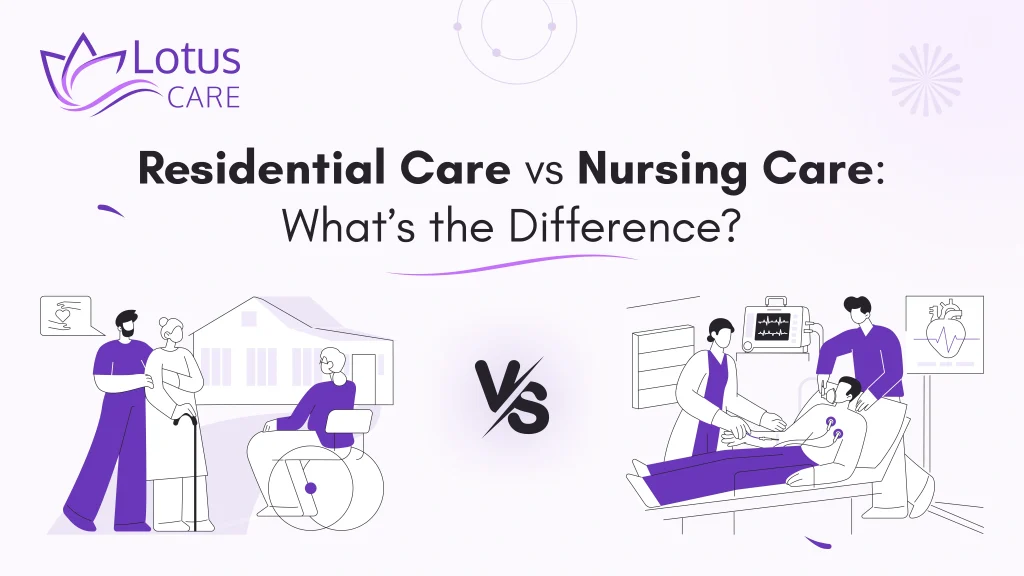
Looking for care, but you are not sure which one is best, residential or nursing? Both offer the type of care that helps your loved one feel like a home, but with different care support.
There are two primary types of care for adults who require daily assistance. One is residential care, and the other is nursing care. Both care include a safe place to live, support for everyday routine, and trained workers to help. The difference comes in the level of health support needed. Residential care homes focus on daily living, while nursing care homes include the help of trained nurses for medical needs. Recognizing this difference is the first step in selecting the appropriate type of care.
This guide will explain to you what is different between nursing home vs residential care homes, and how to choose which one fits your loved ones.
Let’s look into the difference between the two.
What Is Residential Care?
Residential care homes are designed to give people care while supporting the daily needs of residents who do not need medical assistance at all times. Our residential care home provides a safe and comfortable place to live where caregivers will manage everyday routines. Our focus is more on offering the residents support that makes their lives easier and keeps their health steady.
The gentle warmth of spring sunshine, the scent of blooming flowers, and the sound of cheerful chatter set the perfect scene for our recent Spring Garden Tea Party at Lotus Care Homecare. Residents, their families, and staff gathered in our beautifully decorated garden to enjoy an afternoon filled with laughter, music, and homemade treats.
Who Needs Residential Care Supports
Our talented kitchen team prepared a delightful spread of freshly baked scones, finger sandwiches, and a selection of fragrant teas, served in vintage china for a touch of nostalgia. The tables were adorned with colourful floral arrangements, creating a vibrant and uplifting atmosphere.
Bringing Generations Together
- People who find difficulty in managing their daily routine.
- Those who may forget meals or medicines and need a gentle reminder.
- Older adults who feel lonely, unsafe, and are isolated, living on their own.
Offered Help in Daily Living & Social Support
- Staff will handle washing, dressing, meals, and other daily care.
- The resident can join simple activities and spend time with others.
- Shared lounge and dining for residents to create a friendly and social atmosphere.
Staffing and Everyday Routines
- Care homes have trained staff on duty day and night to support your loved ones.
- Routines are calm and easy to follow without being dependent on other people.
Residential care homes maintain a focus on offering the individual independence and maintaining well-being in comfortable homes.
What Is Nursing Care?
Nursing care is for those who are dealing with complex medical care or need further medical assistance from trained nurses. Nursing care homes offer a safe place to live along with the elderly care services. The focus is maintained on offering support with ongoing health conditions or higher care needs.
Nursing Care Is Designed For
- People who have a medical condition that needs regular checks.
- Older adults who need care with wounds, injections, and feeding tubes.
- Anyone who needs close supervision due to serious illness or limited mobility.
- People who cannot manage themself safely without the help of a nurse.
Nursing and Clinical Support
- Registered nurses are available at all times.
- Staff available to monitor health changes and provide medical assistance when needed.
- Nurses work with doctors and specialists to follow care plans.
- Clinical support is given in case of emergency and to keep health stable.
Monitoring and Medication
- Nurses manage medication timings and doses.
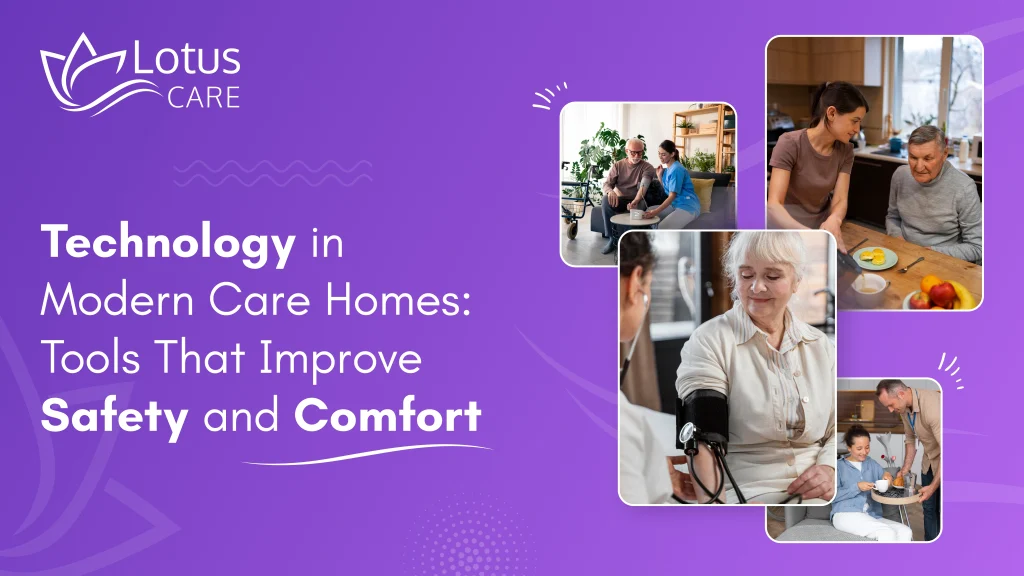
- Regular vital check, which includes blood pressure, temperature, and oxygen levels.
- Staff look after wounds, long-term conditions, and other clinical needs.
- Regular monitoring helps in identifying early changes to respond quickly.
Nursing care homes combine a supportive environment with always available medical attention.
Residential Care vs Nursing Care. The Key Differences
Here are the key differences between residential and nursing care.
1. Level of daily support
- Residential care helps with the daily routine.
- Nursing care offers the same support but with medical assistance.
2. Medical Needs
- Residential care is suited for a person who needs basic care.
- Nursing care is for those who are suffering from serious illness and require close monitoring.
3. Staff Skills
- Residential care is led by trained nurses.
- Nursing care is taken by registered nurses who can handle medical tasks.
4. Health Monitoring
- Residential care keeps focus on regular well-being.
- Nursing care tracks health regularly while keeping close observation.
5. Medication Support
- Residential care keeps the medication cycle running smoothly.
- Nursing care handles medication, doses, and the need for other medical equipment.
6. Physical Support
- Residential care supports people who can move with some help.
- Nursing care supports people who need specialists.
7. Cost
- Residential care usually costs less because it does not include medical services.
- Nursing care costs high because of 24/7 medical and senior healthcare support.
Residential care homes are effective if you are looking for a place that takes care of daily routines without increasing difficulty. On the other hand, nursing care homes are the best option if long-term elderly care services are needed.
How to Decide Which Type of Care Your Loved One Needs
Choosing between residential and nursing care becomes easy when you are clear about what your loved one’s needs are and you know what support they need each day.
Simple Question to Think About
- Can they wash, dress, and move around on their own?
- Do they need help with meals, medicines, or personal care?
- Do they have health issues that need quick assistance?
- Have there been any changes in their behavior?
- Do they feel safe without medical support?
These questions will help you see what level of care is needed.
Signs That You Need Nursing Care
- They have a health problem that needs regular attention.
- They need help from a nurse or specialist, not the caretaker.
- Their health changes often, or they feel unwell all the time.
- They struggle with movement or need special equipment.
- They need support with medicines that must be given correctly.
These signs show that daily nursing support may be the safer option for your loved ones.
When Residential Care Works Well
- They need daily help but not medical support.
- They can move around but with little support.
- Their health is steady and does not need nursing care.
- They enjoy being around others and taking part in activities.
- They want a simple routine with senior healthcare support.
Resident care is a good choice when someone needs steady help but not medical attention.
Life in a Residential or Nursing Home
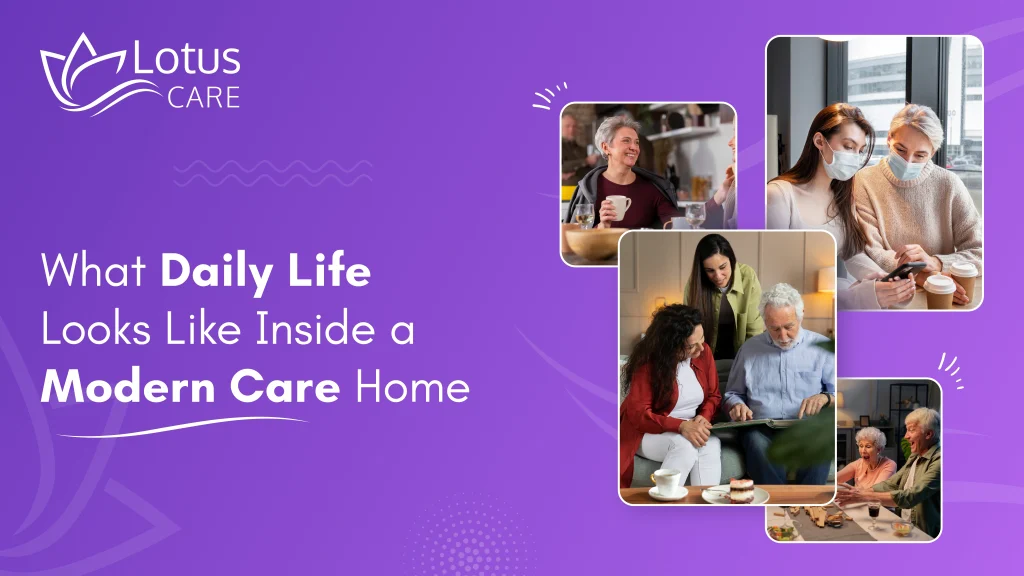
Life at Lotus Care is designed to offer the proper comfort, calmness, and support. Both residential and nursing care homes focus on daily support, a friendly environment, and regular routines that help residents feel settled.
Here are some activities that keep occurring in care homes:
Social Activities and Community
- Residents can join the group activities such as light exercise, crafts, and games.
- Shared lounges and gardens offer the space to relax and communicate with others.
- Staff encourage simple and friendly interaction to make the place feel warm and welcoming.
- Family and friends are welcome for a visit to help the resident stay connected.
Meal, Routines, and Independence
- Daily meals are prepared by keeping the resident’s choices and preferences in mind.
- A fixed routine is planned and helps residents feel organized.
- Staff offer daily assistance and encourage residents to stay independent.
- Support is given for those who need extra care and help.
Health, Safety, and Family Communication
- Staff monitor each resident’s well-being every day.
- In a nursing homes UK, medical staff check medical needs and provide clinical care.
- Safety measures are in place to reduce risks and keep residents secure.
- Families are kept in the loop by sharing the updates on their family member’s health.
All these activities happen in the care home to make the resident feel safe and comfortable.
Final Thoughts
Choosing between a nursing home vs residential care home comes down to the need for care each day. Residential care homes may be enough if your family member can easily manage most of the daily routine, but needs some support. Nursing care homes are the right choice when regular medical help and supervision are needed.
At Lotus Care, our homes are set up to provide both styles of support depending on each person’s needs. Many families find comfort in knowing that as their care needs grow, they will receive the support they need.
Take your time, look at the daily routine, health changes, and how independent they are. With the right care plan and support, your loved one can live in a safe and supportive environment.
Helping residents maintain their independence is as important to us as it is to them. We can support them with day-to-day tasks such as dressing, bathing, going to the toilet,...
Helping residents maintain their independence is as important to us as it is to them. We can support them with day-to-day tasks such as dressing, bathing, going to the toilet,...
Helping residents maintain their independence is as important to us as it is to them. We can support them with day-to-day tasks such as dressing, bathing, going to the toilet,...
Know more about care homes.
Connect with us for person-centered care, comfort, and a warm place that truly feels like home.